Roles
AI-Driven Design, UX/UI Design, Interactions Design
Tools
Figma, Photoshop, Illustrator, After Effects
Time Frame
First Design @Smith College Art Museum,
Aug - Sep 2022
Second Design with GPT-AI,
from Feb 2024 - Now
Behind the frames

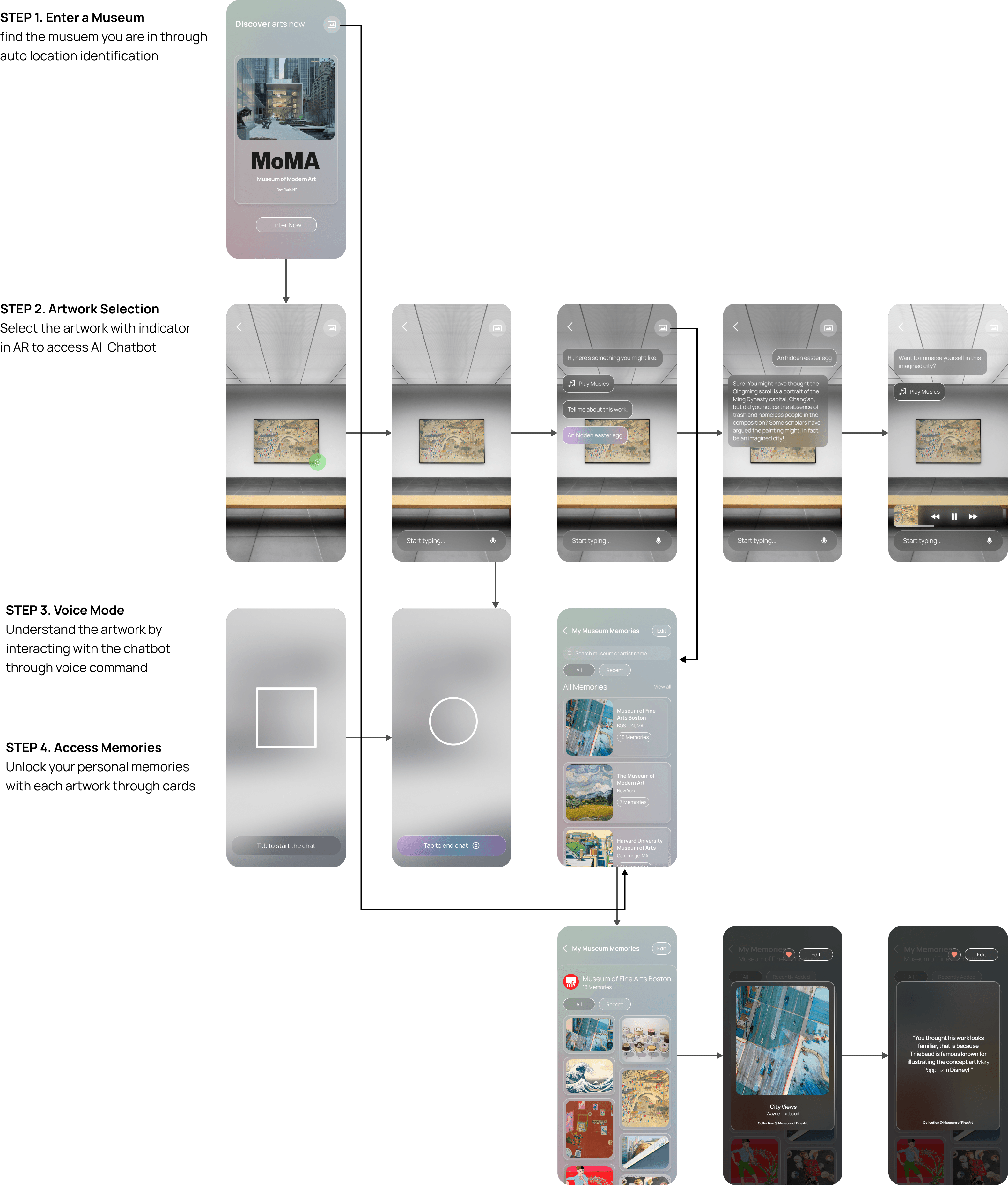
01 Voice Interaction
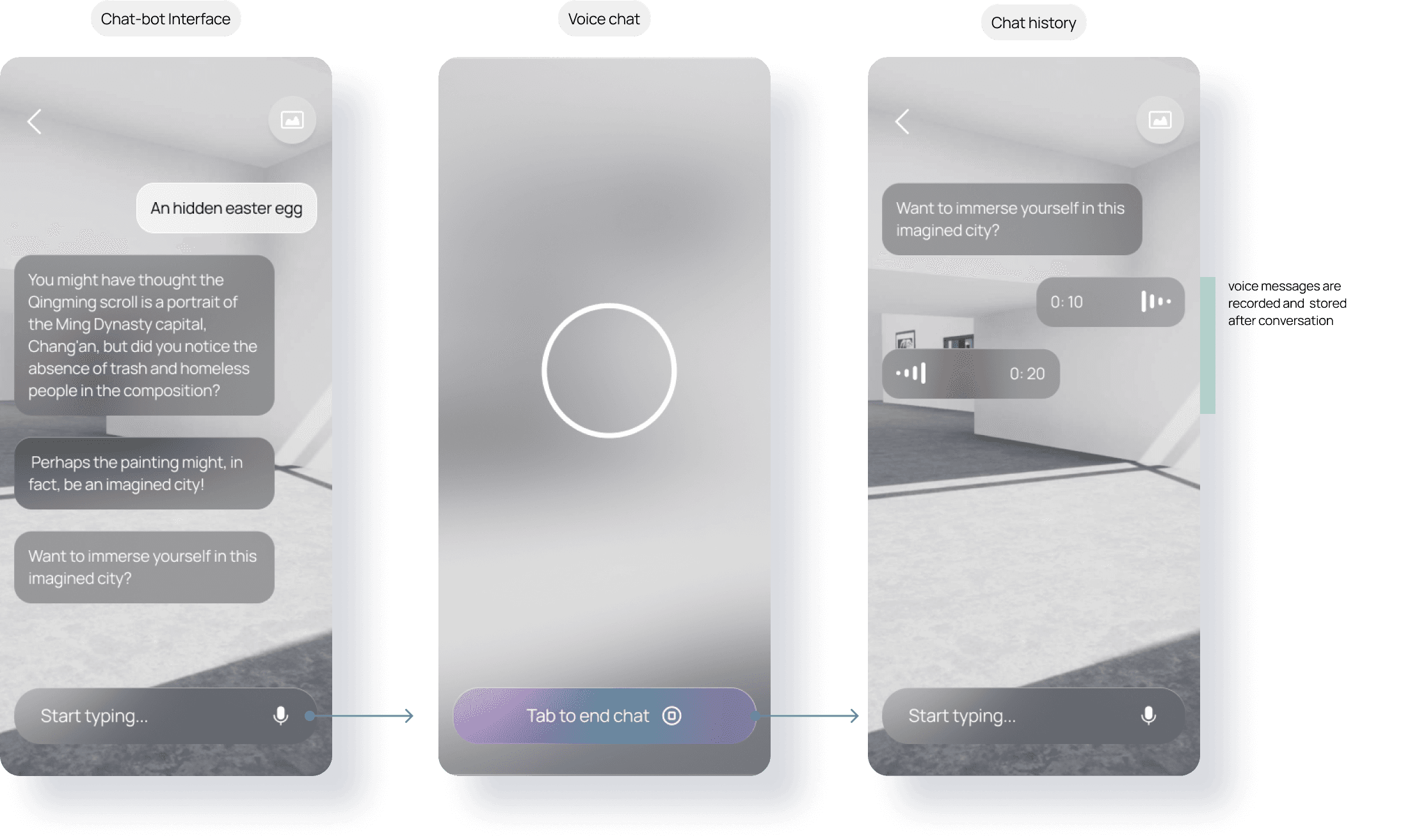
Press to speak and engage with interactive AI guide, Felix, named after the famous post-impressionist artist Félix Vallotton. he will guide you to seamlessly immerse in the narratives and navigate exhibits.

02 Access Your Curated Museum Memories
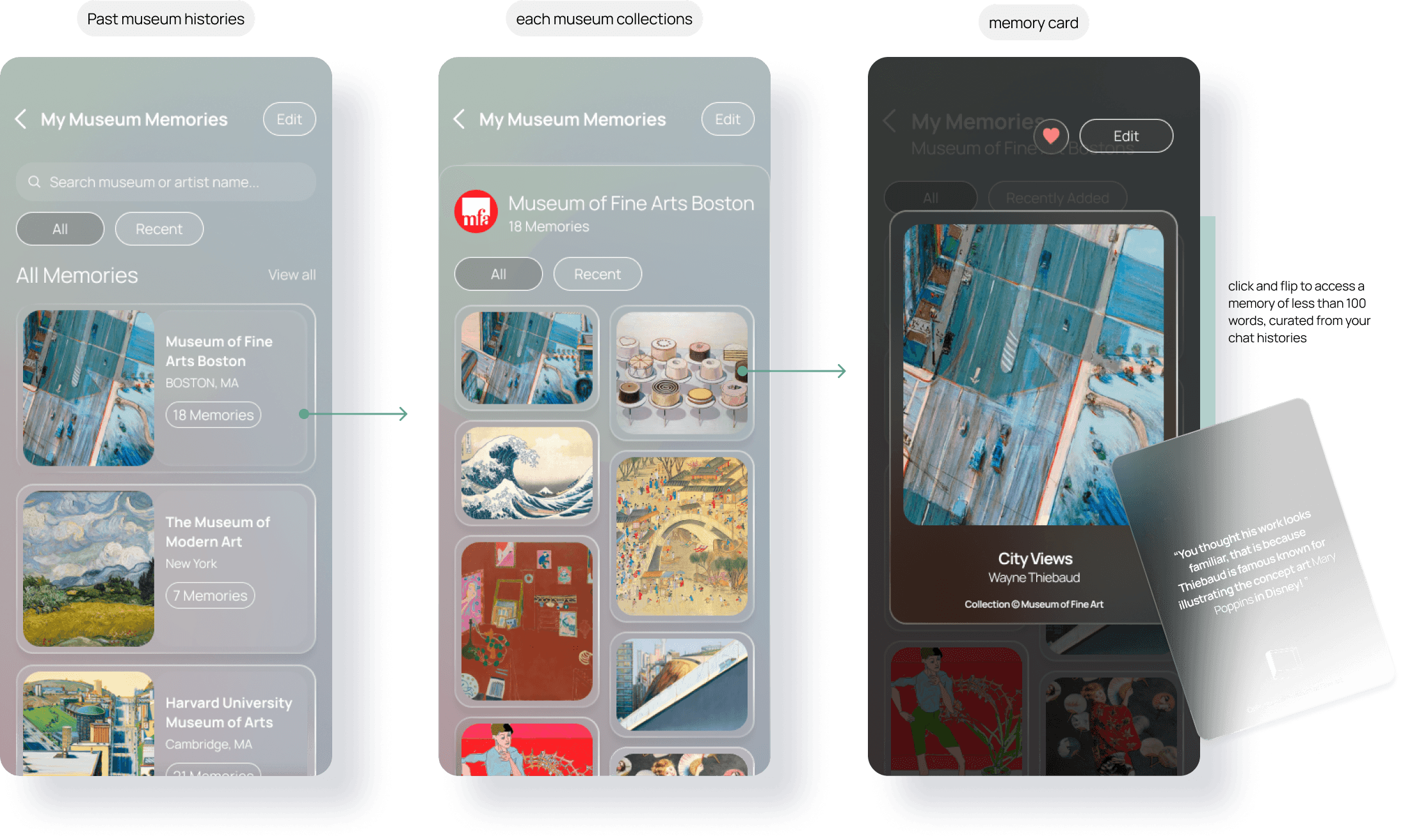
AI-Chatbot will compile a collection of your museum memories, access by browsing you museum history.
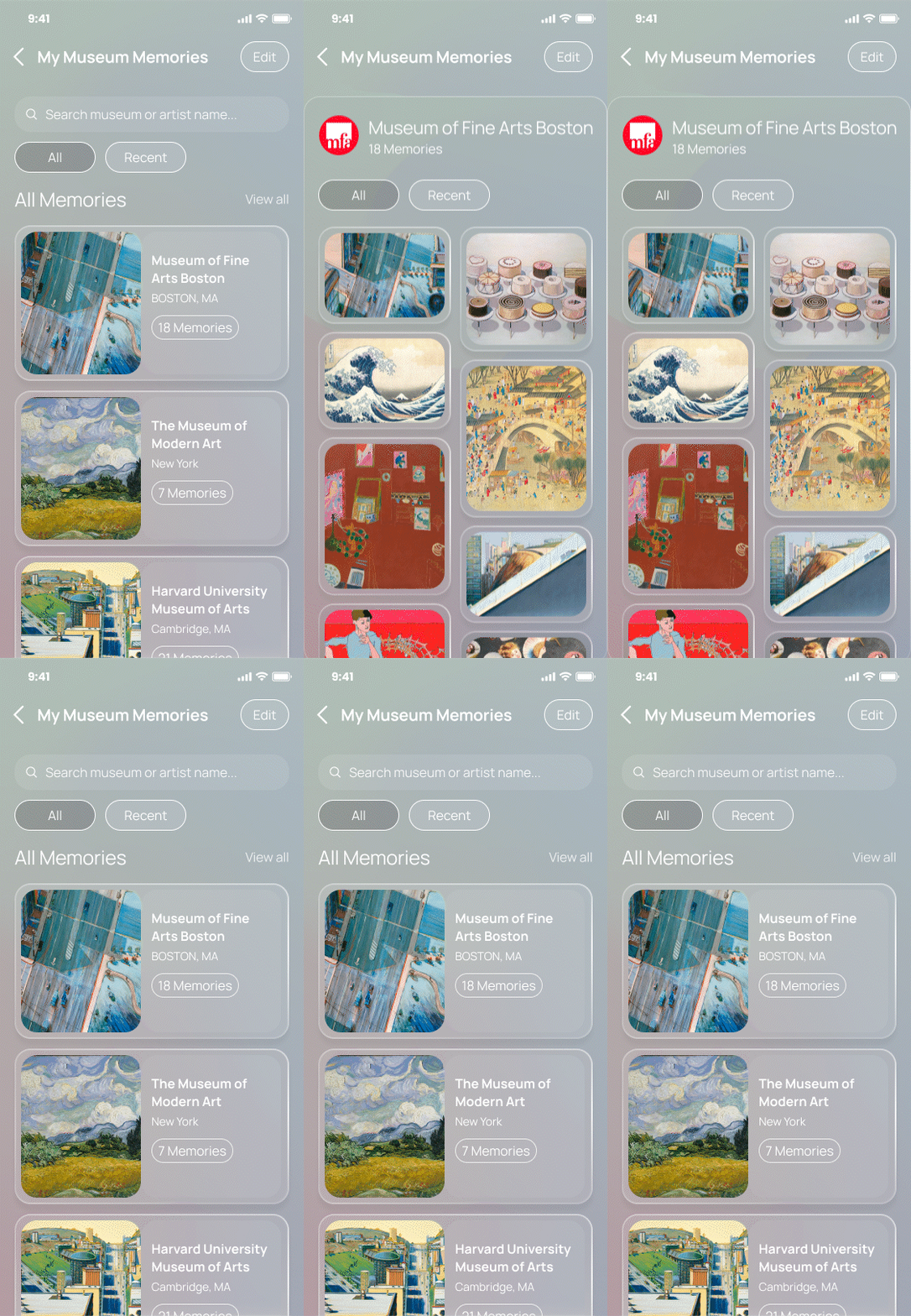
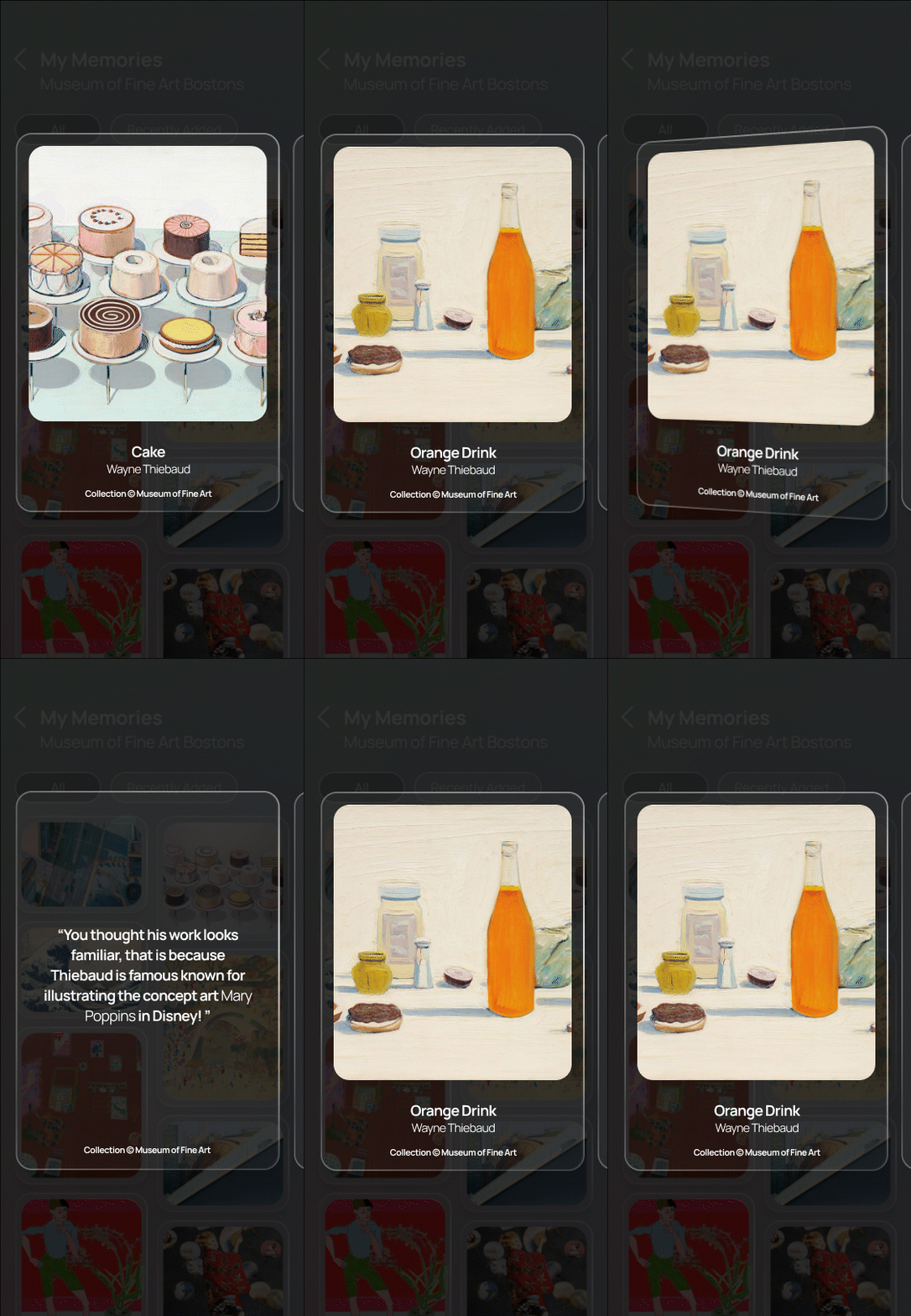
Swipe and scroll to access individual art work you have interacted with Behind The Frame, and read a curated descriptions of your interaction with the artwork.
Did you see the process?
What Is Really
Behind The Frames?
I began working on Behind The Frame in September 2022, where I worked as a student UX designer under the guidance of the Smith College Art Museum. Although my initial design solution addressed many user problems, I noticed how new AI solutions can improve the museum-visiting experience ecosystem.
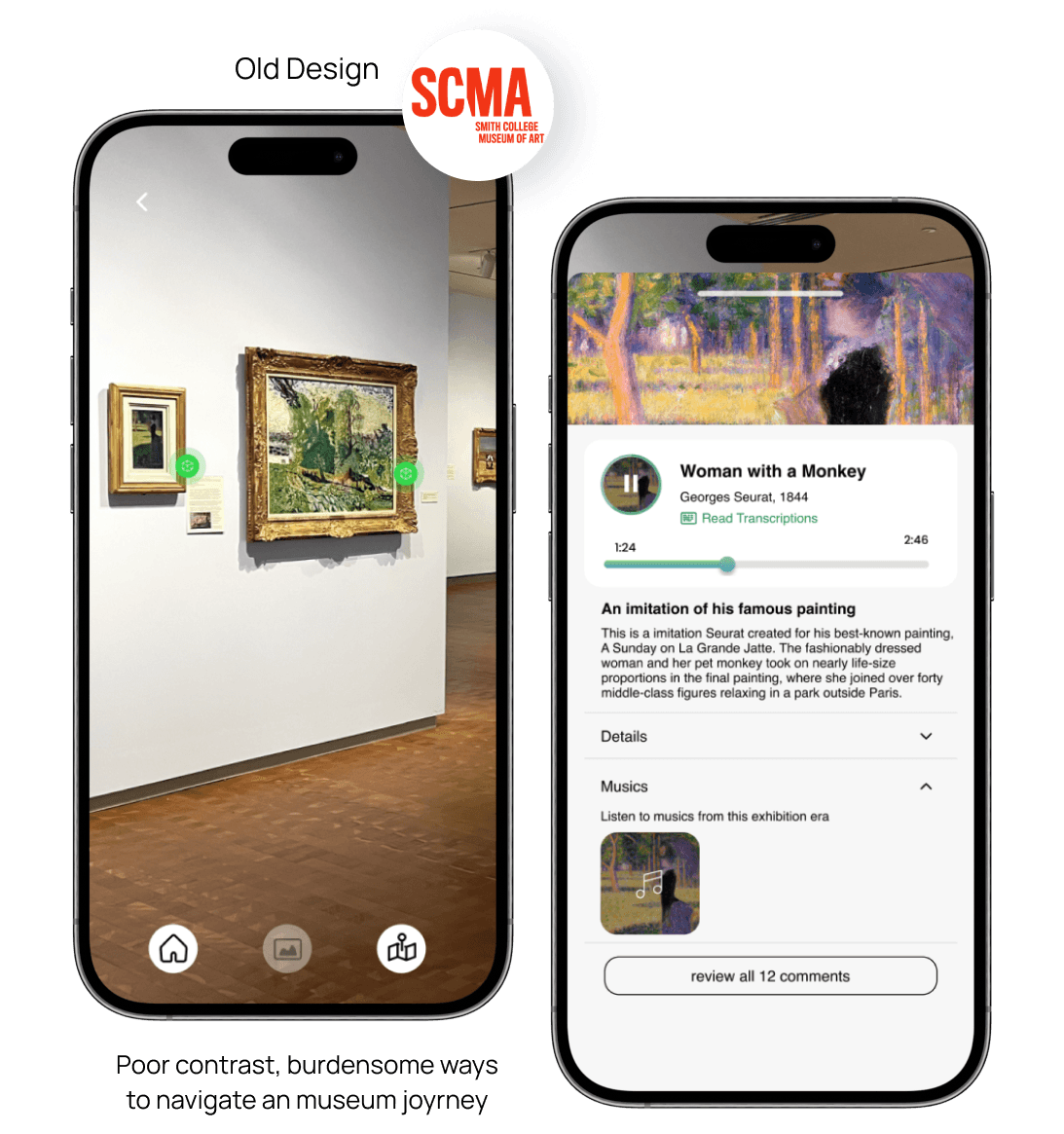
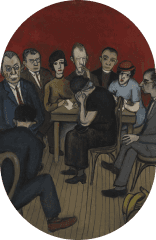
We need a new solution!
Problem
Spaces
What is the
Future of Museums
The Raise of Media Technologies and Immersive Art
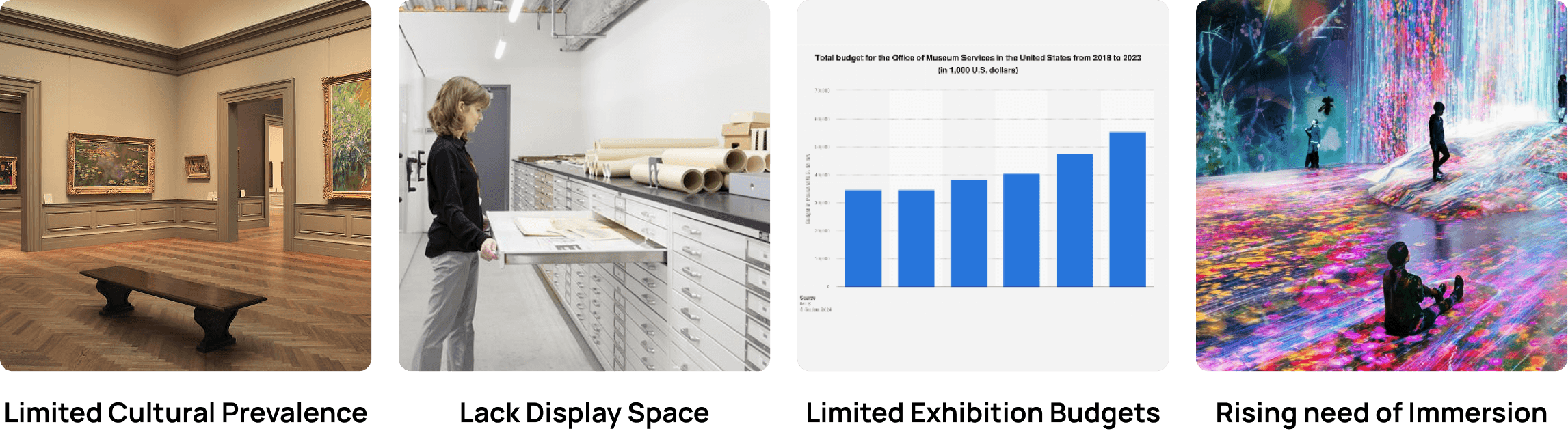
Major museums in the US display only 4% of their exhibition collections, with less than 1% focused on immersive interactive installations. According to ArtNet, Gen Zers are less interested in visiting traditional museums but show a noticeable interest in contemporary art and prefer interactive and immersive experiences.
With increasing demand among young audiences for faster, more holistic experiences, how can we bring traditional mediums to their attention?
Insights
Discovery
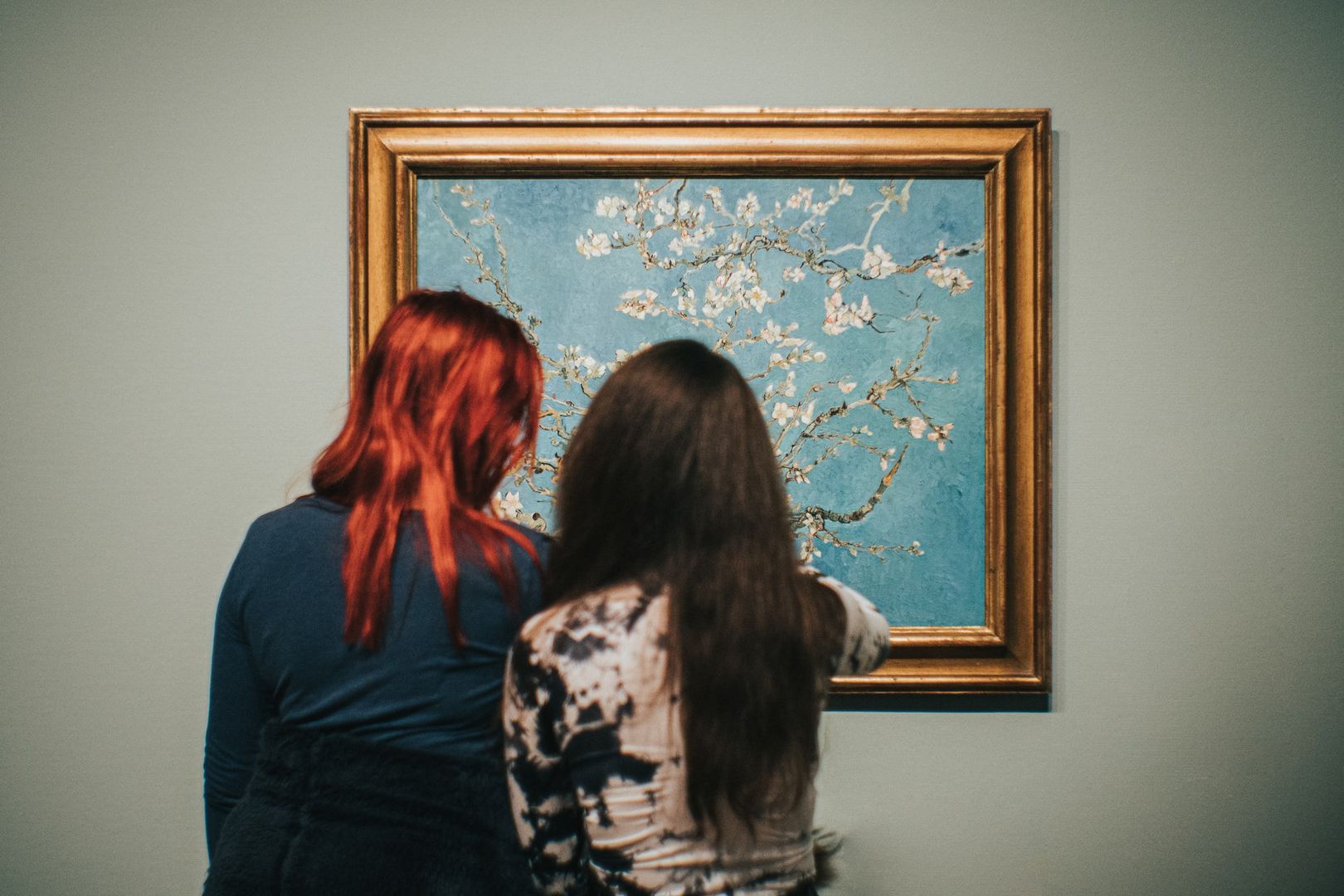
"I don’t have time to google and watch documentaries beforehand."
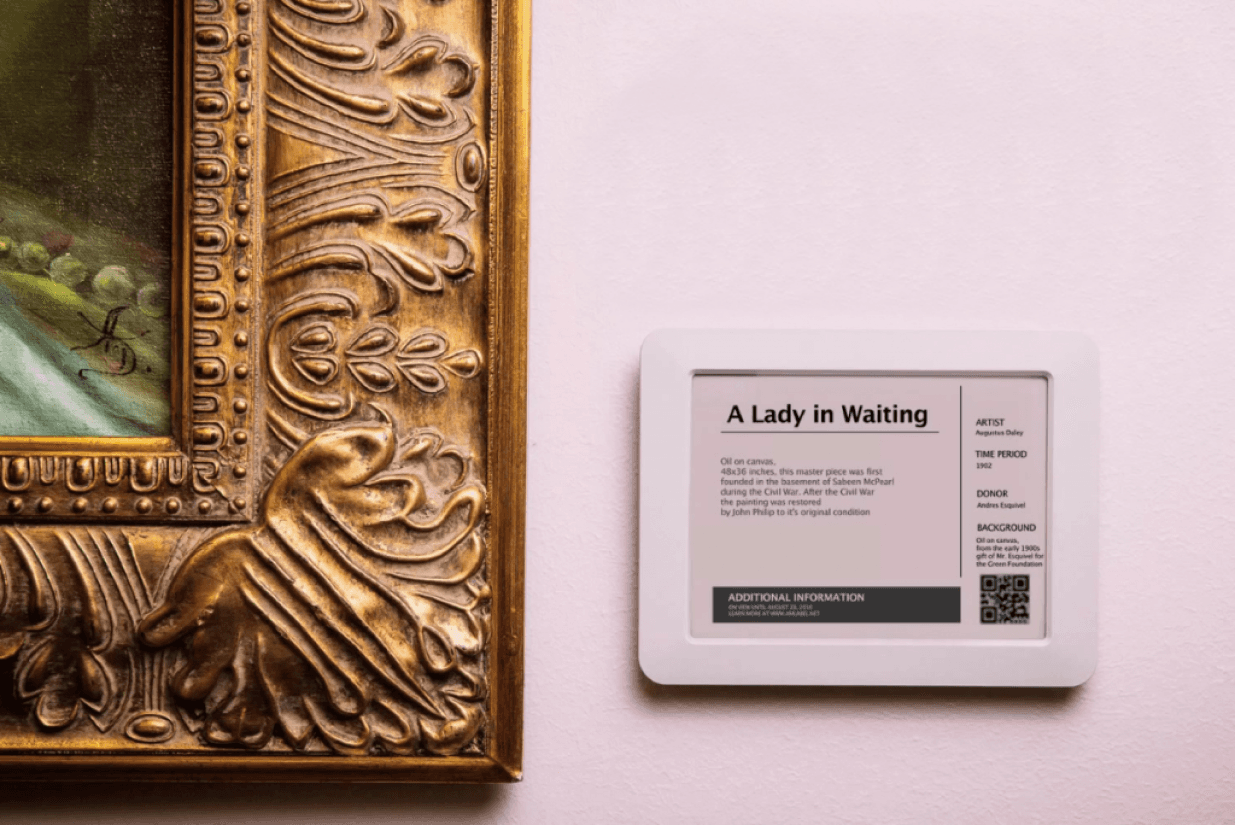
"Artist statements and labels are either too long or too vague."
Vague labels
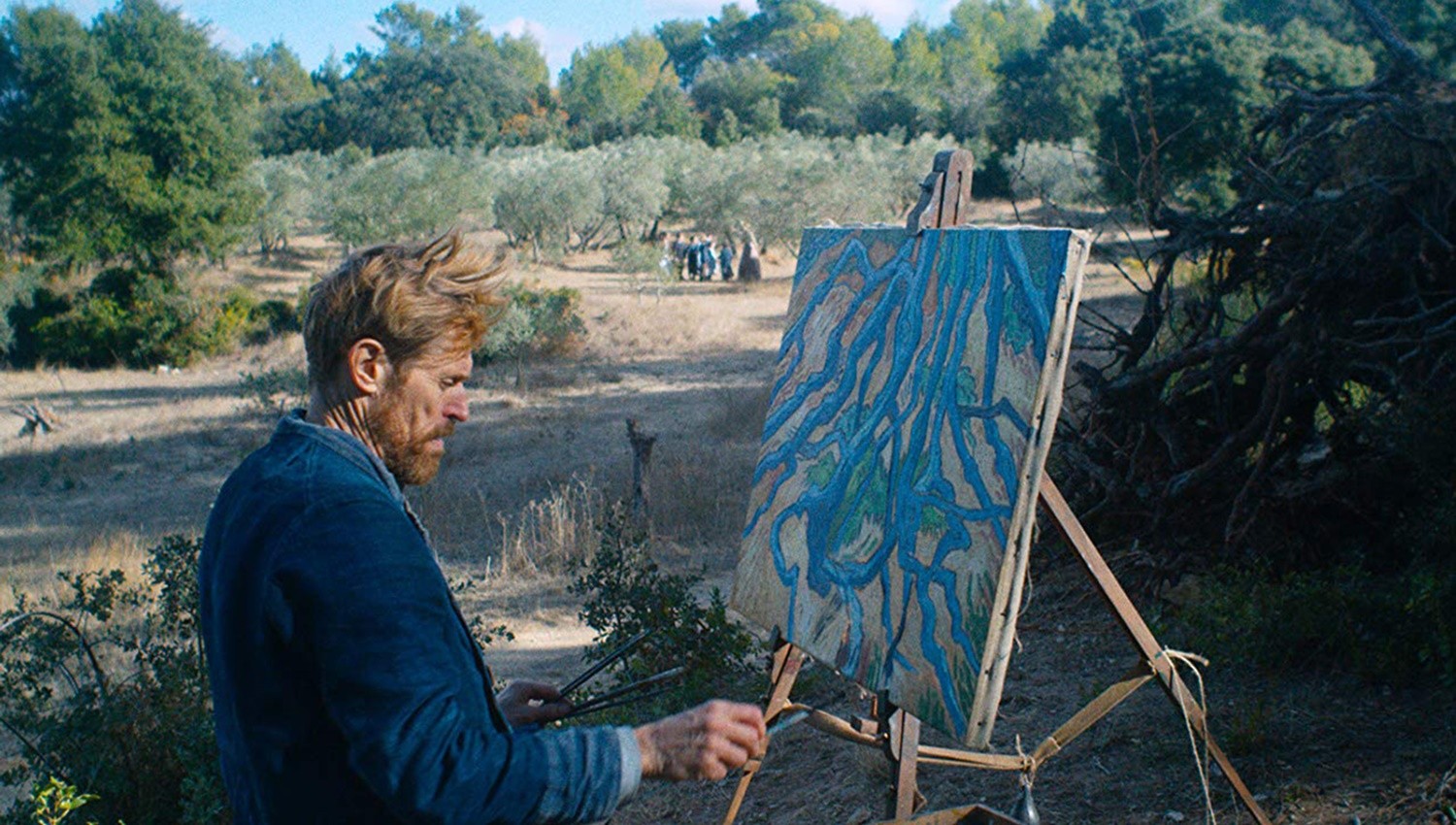
"Where does the artifact come from, how was it used before?"
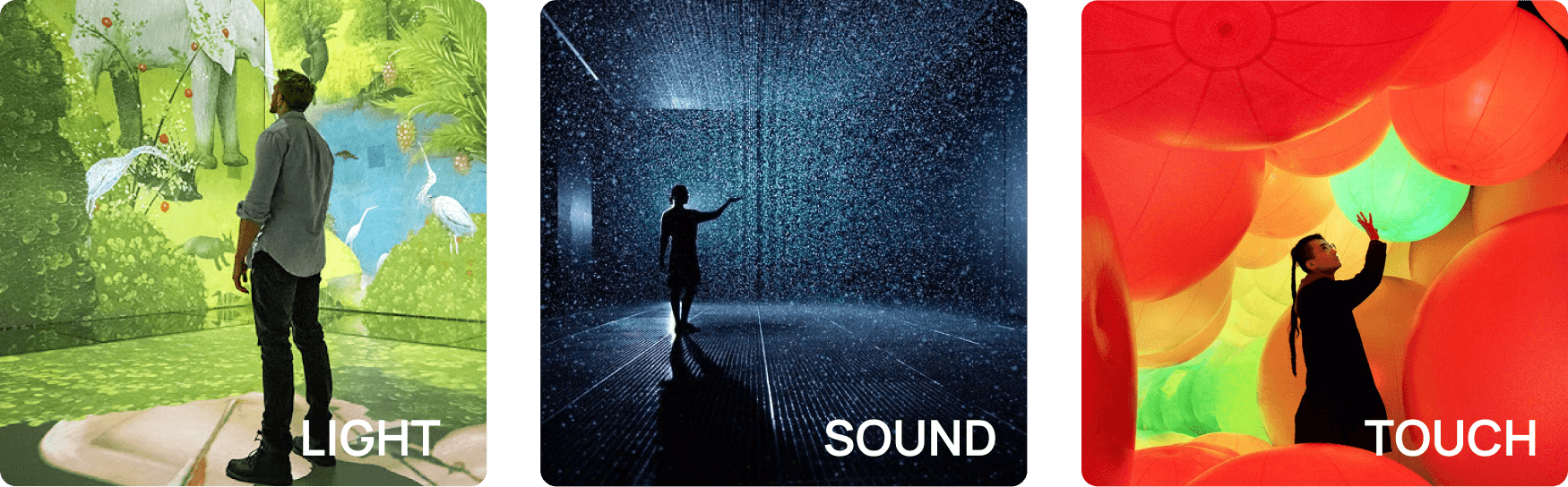
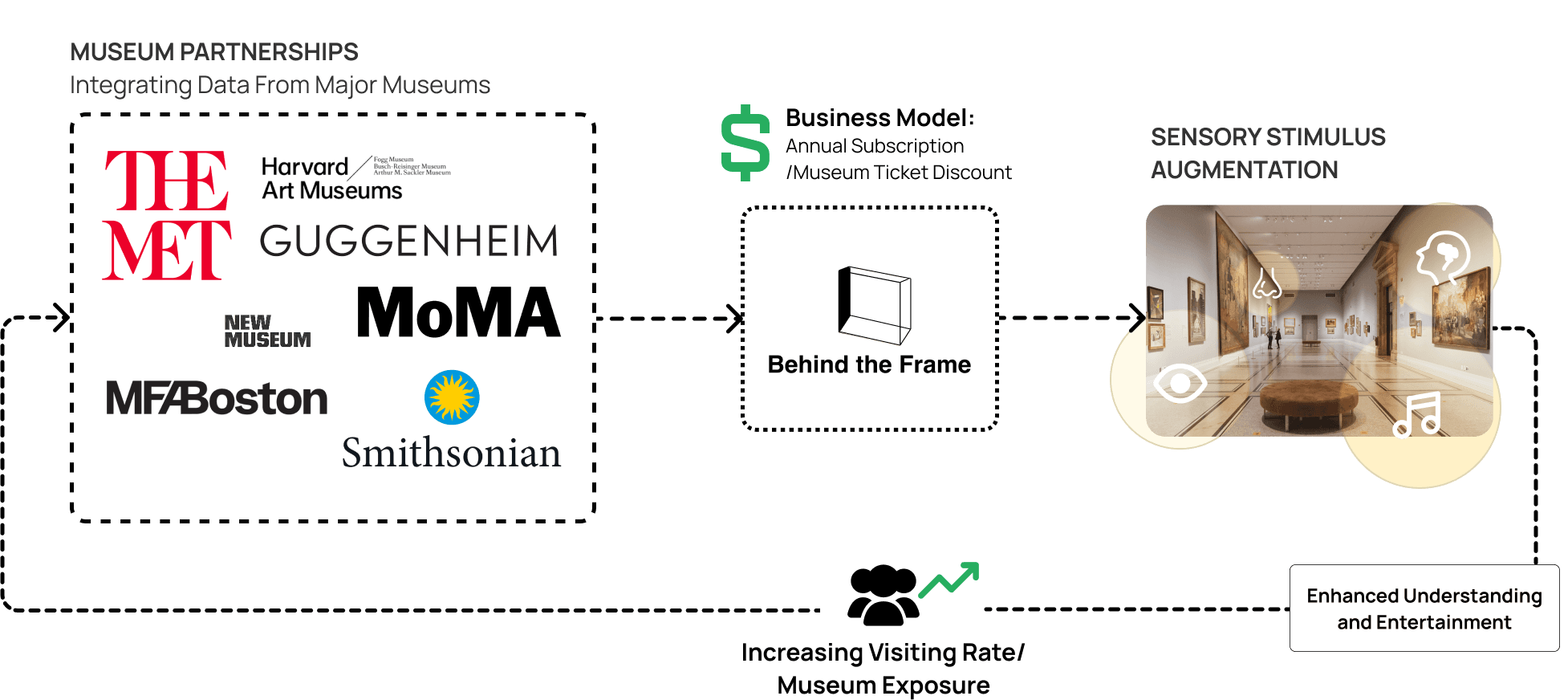
Based on user research I conducted with with Gen Z museum visitors and interview and 3 museum stakeholders from Smith College Art Museum. I discovered that Gen Z museum visitors want the full sensory experience, stimulated visually, mentally, and orally, they want the Wow moments that akin to discovering hidden gems in a forest.
New
Solution
To user pain-points
User
Journey
Final Design Flow

User Painpoints
Brochures and wall descriptions are unclear.
Lack of customized, cheap available guidance that suits user's pace and time.
Solutions

User Painpoints
Want to avoid repetitive typing and looking at the phone screen.
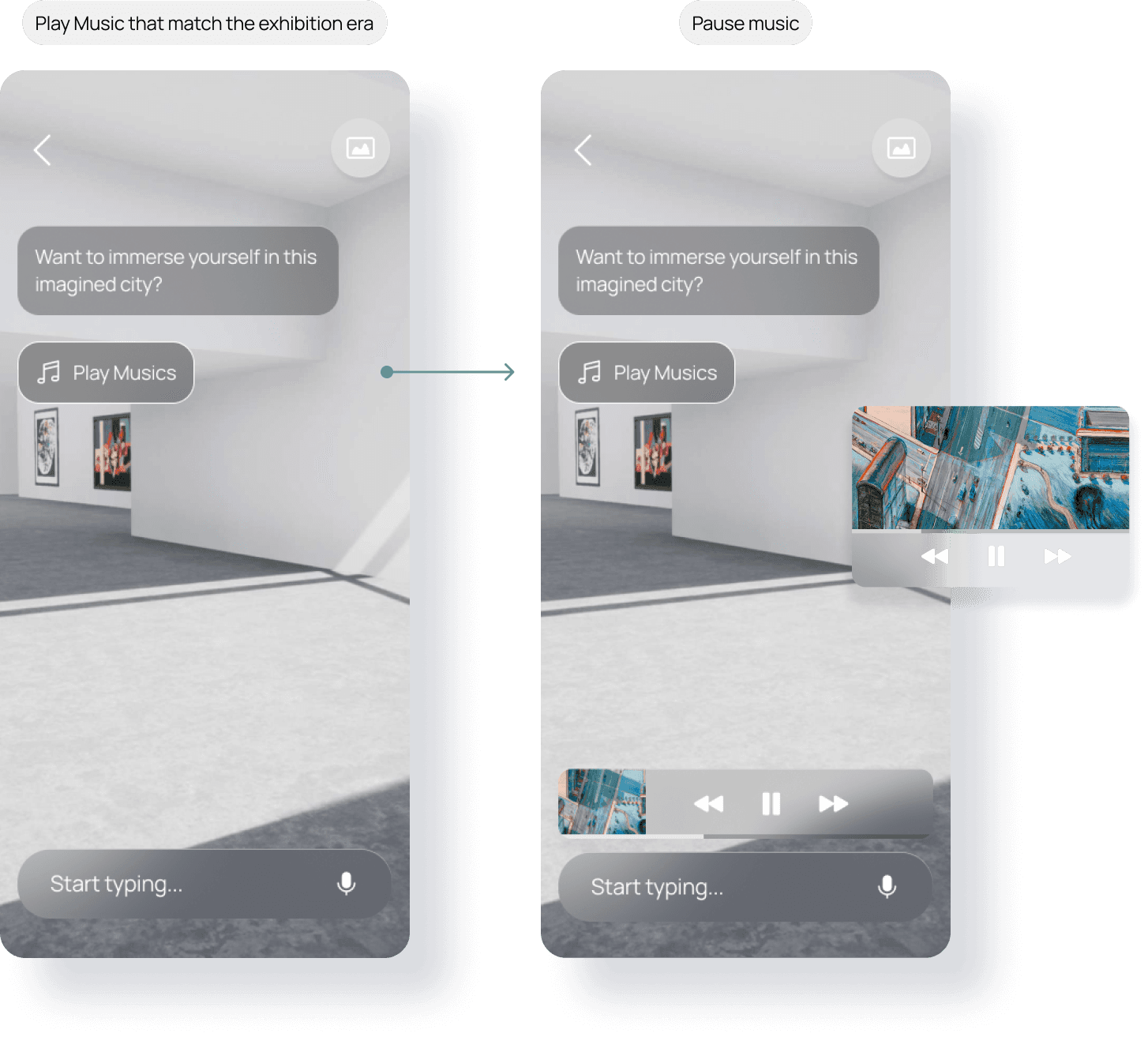
Hard to open up the sensory experiences.
Solutions 01
Quick access to video-chat format with easy to tab exit mode,
Solutions 02
Listen to immersive music curated to bring visitors back to the cultural era of the art piece.

User Painpoints
Want to avoid repetitive typing and looking at the phone screen.
Hard to open up the sensory experiences.
Solutions
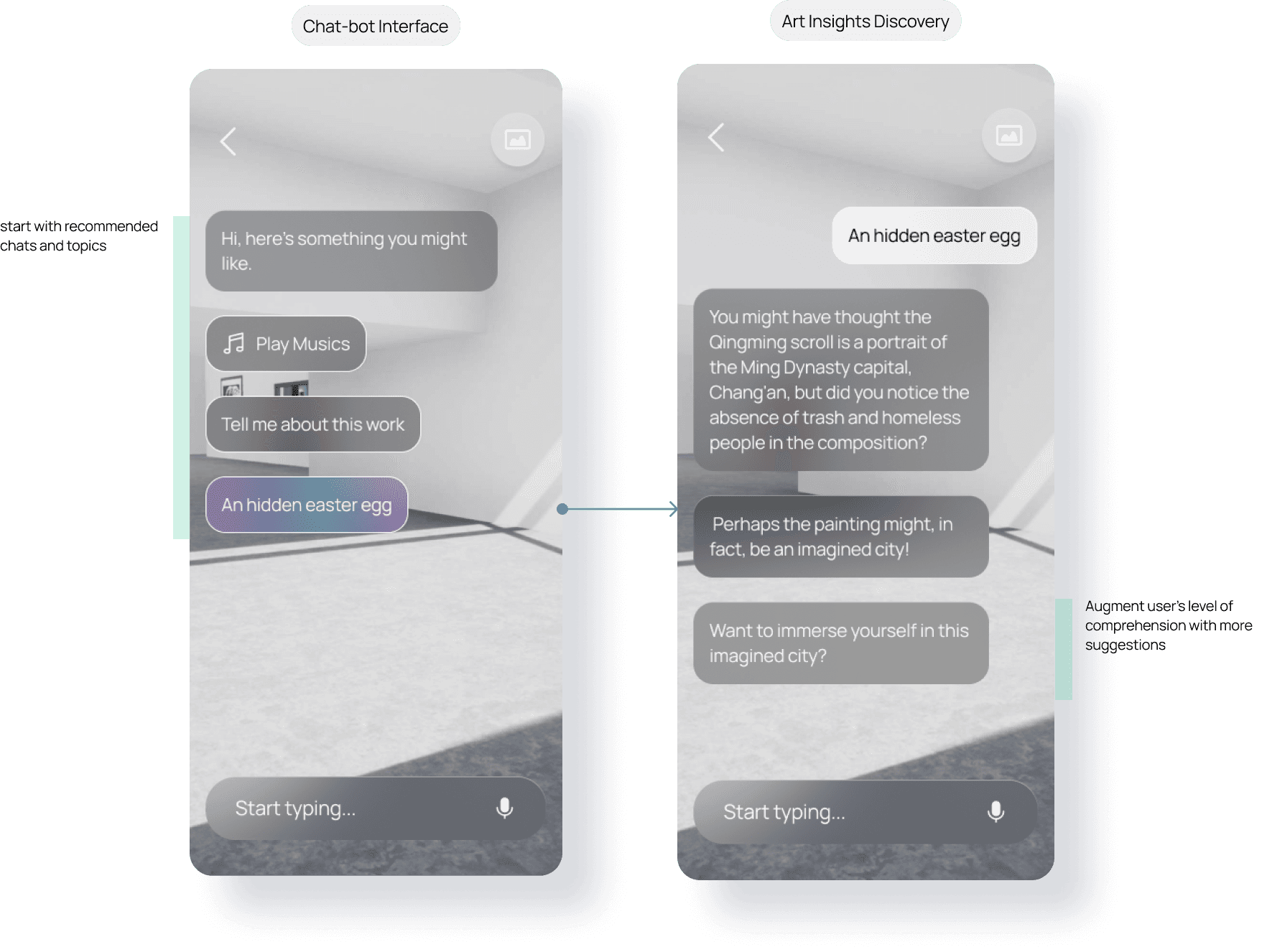
AI-Chatbot will compile a collection of your museum memories, access by browsing you museum history. Swipe and scroll to access individual art work you have interacted with Behind The Frame, and read a curated descriptions of your interaction with the artwork.
Design
System
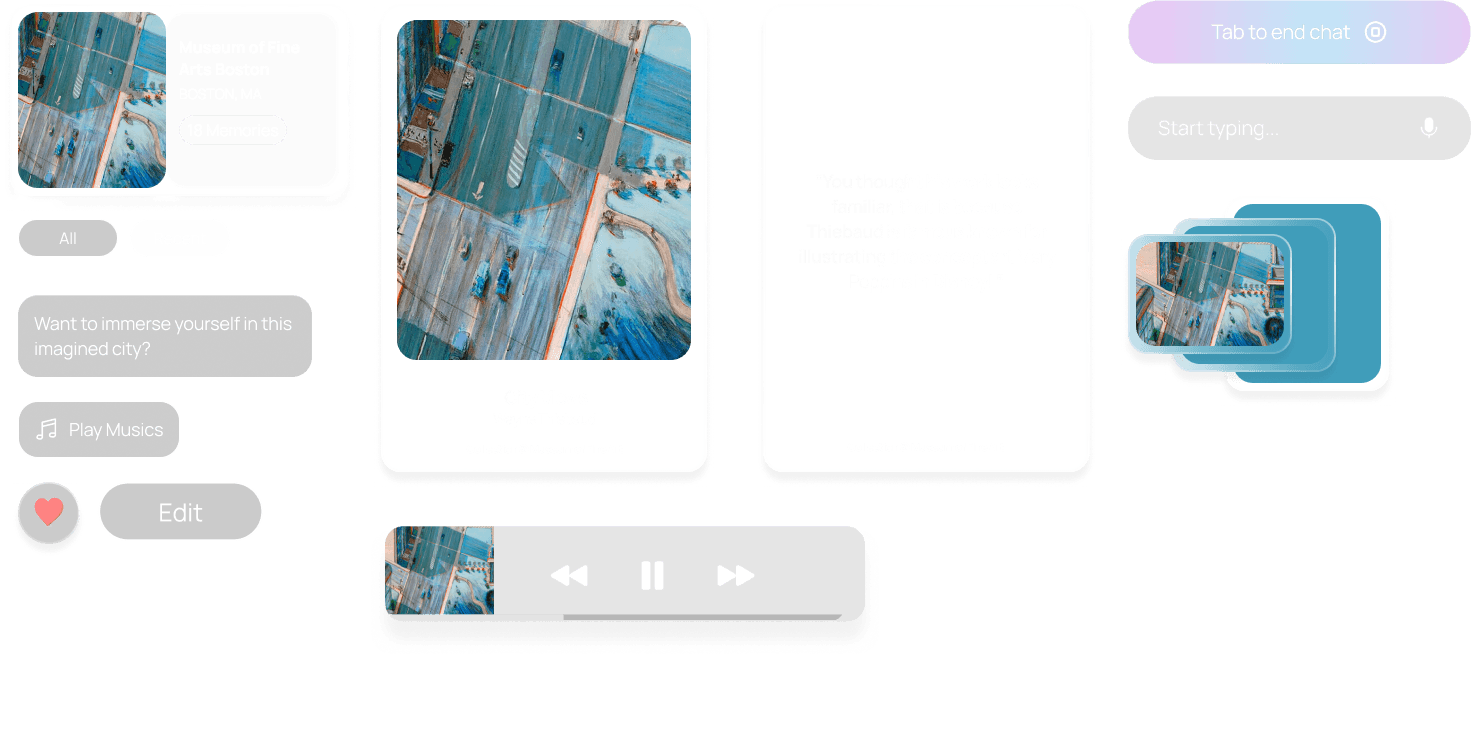
UI Components
I used transparent cards to maximize user's attention with the visual artwork itself.
Logo Design
Considering the symbol as a dynamic logo, I designed it based on how people experiences a painting positioned in a rectangular frame. The simplicity and geometry of this design can later be translated into diverse interactions.

Hi! I'm Felix.
Voice User Interface Motion States

Resting

Awake

Listening

Speaking

Processing

Success

Confused

Failure
User Flow
Take Aways
Immerse yourself in the environment
During the re-design process, I went to The Harvard Museum of Art several times to test out different user needs. Users' interactions with their phones change throughout their art viewing experiences. Holding a phone for a long time in a museum gallery is highly inconvenient, and it is important to consider the best way for users to trigger and view content in different conditions.